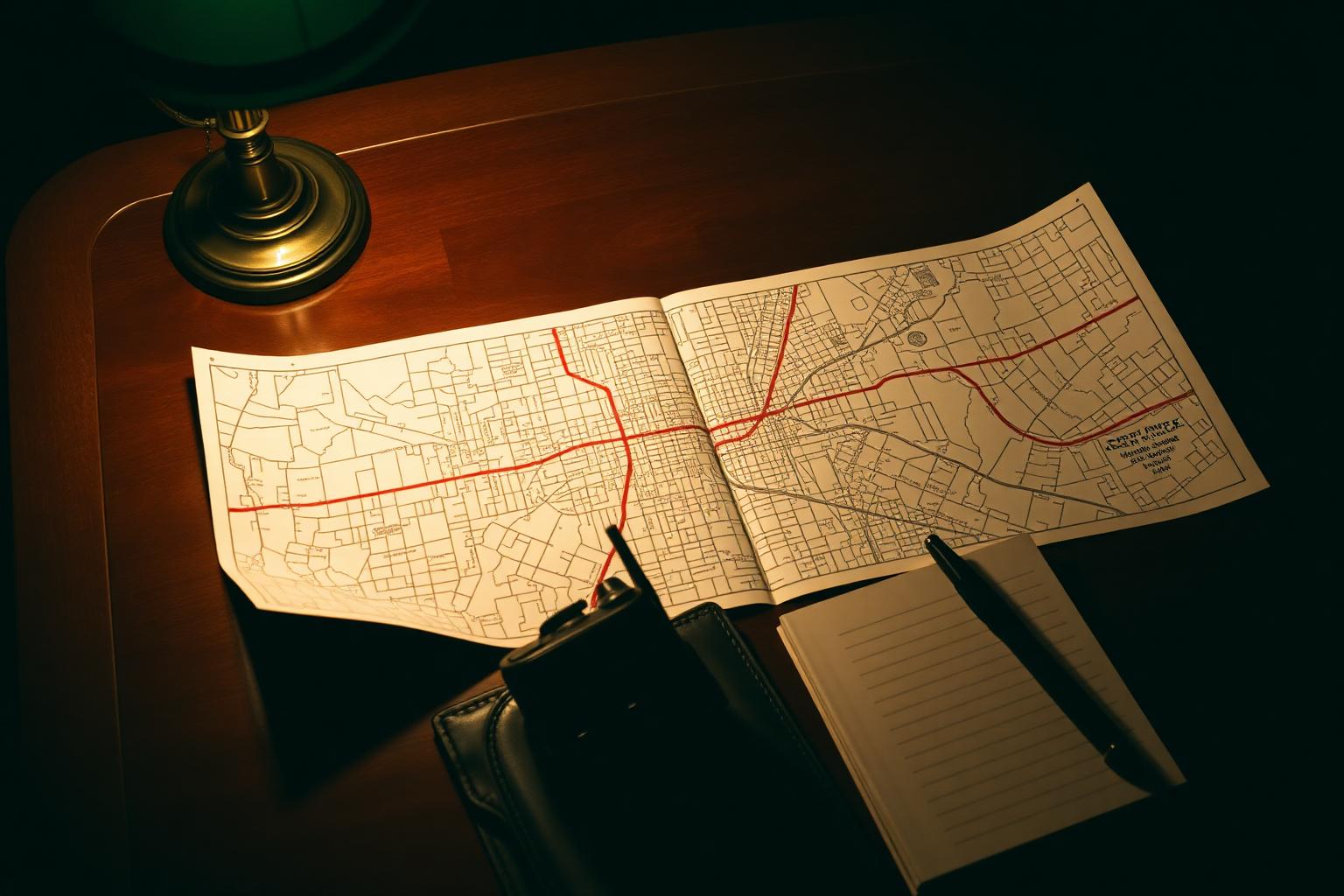
The Part That Determines Everything
Every experienced operator knows: the quality of a detail is decided before the principal leaves the house. The advance is where problems are prevented or created. And the gap between a competent advance and a thorough one is where incidents happen.
The Digital Advance Comes First
Before you physically visit anything, you should already know 80% of what you need. This is the biggest shift in modern CP — the advance starts at a laptop.
- Satellite imagery for building layouts, parking access, roof positions, and line-of-sight concerns. Google Earth Pro gives you historical imagery — see the location during past events.
- Social media scanning of the venue, nearby locations, and the event itself. Has someone posted interior layouts? Back-of-house photos? Is there a protest planned two blocks away?
- Crime data for the specific neighborhood. Not the city average — the block-level pattern.
- Your principal's digital exposure. Has the PA posted the dinner location on a public calendar? Has the venue tagged a "VIP event" on Instagram? If so, your OPSEC is already compromised before you've driven a single route.
The Physical Advance: What Gets Missed
Everyone knows to check entry/exit points and drive the route. Here's what separates a professional advance from a checkbox exercise:
Routes
Drive them at the same time of day the principal will travel. A route that's clear at 2pm can be gridlocked at 7pm. Count traffic lights — every red is a vulnerability window. Note road surface quality on the final approach; in some regions it degrades dramatically off the main road.
Map safe havens along every route option. If you need to divert, where do you go? Not "the nearest hospital" — the nearest Level 1 trauma center, and you should know the ER bay entrance, not the visitor parking lot.
Venues
Restrooms. A frequently overlooked vulnerability. The principal is alone, behind a door, in a public space. Can you control access? Is there a private option?
Communications. Does your radio work inside the building? Thick walls, underground levels, and metal structures kill comms. Test this during the advance — not on game day.
Hold rooms. Where does the principal wait before entering the main space? This room needs to be secure, private, and have its own exit route that doesn't pass through the public area.
"I advanced a hotel in the Gulf. Beautiful venue, great layout — but radios went dead past the second floor because of the building materials. If I hadn't tested during the advance, we'd have been deaf when it mattered."
The Advance Failures That Actually Cause Problems
Almost every detail that goes sideways traces back to one of these:
- Wrong time. You advanced at 2pm Tuesday. The event is 9pm Friday. Different crowd, different parking, different risk profile. Might as well be a different venue.
- Stale intel. You advanced it three months ago. Since then, construction changed vehicle access and outdoor seating blocked the exit route. Advances expire.
- No venue coordination. Showing up on game day trying to negotiate private entry and parking. This should be locked down during the advance, not improvised at arrival.
- OPSEC leaks you didn't catch. The venue posted about hosting a VIP. The assistant shared the calendar. The principal's spouse tagged the location. Nobody checked.
The Advance Mindset
The advance isn't a checklist. It's one question, asked at every point in the timeline: if something goes wrong right here, what's my next move?
When you can answer that at every stage — arrival, venue, departure, medical emergency, vehicle breakdown, crowd incident — your advance is complete. When you can't, you have more work to do.
Stay Ahead of the Detail
Daily threat intelligence, country risk profiles, and 580+ positions across 40+ countries.
Get Access →